Two-photon collisions constitute a prominent process in electron-positron colliders, producing final states with positive charge parity such as $\pi^0$ and $\chi_c(3915)$. These collisions play a critical role in discovering exotic hadronic states. While characterized by a small cross section, the increasing luminosity of modern colliders enables novel approaches to explore physics beyond the Standard Model – including glueball searches, charmonium-like state studies, and future Higgs boson production at facilities like CEPC and FCC-ee.
The Belle II experiment, operating at a center-of-mass energy of $\sqrt{s} \approx 10.6$ GeV, has achieved sustained data-taking with instantaneous luminosity exceeding $5 \times 10^{34}$ cm$^{-2}$s$^{-1}$, marking a transformative era for two-photon physics. However, the electron-positron pairs ($e^+e^-$) in two-photon final states frequently escape detection in the Belle II apparatus, resulting in low reconstruction efficiency and elevated background levels.
To address these limitations, this workshop will:
1. Examine two-photon collision physics in electron-positron colliders
2. Discuss innovative detector technologies for measuring escaping $e^+e^-$ pairs
3. Explore designs for complementary external detection systems
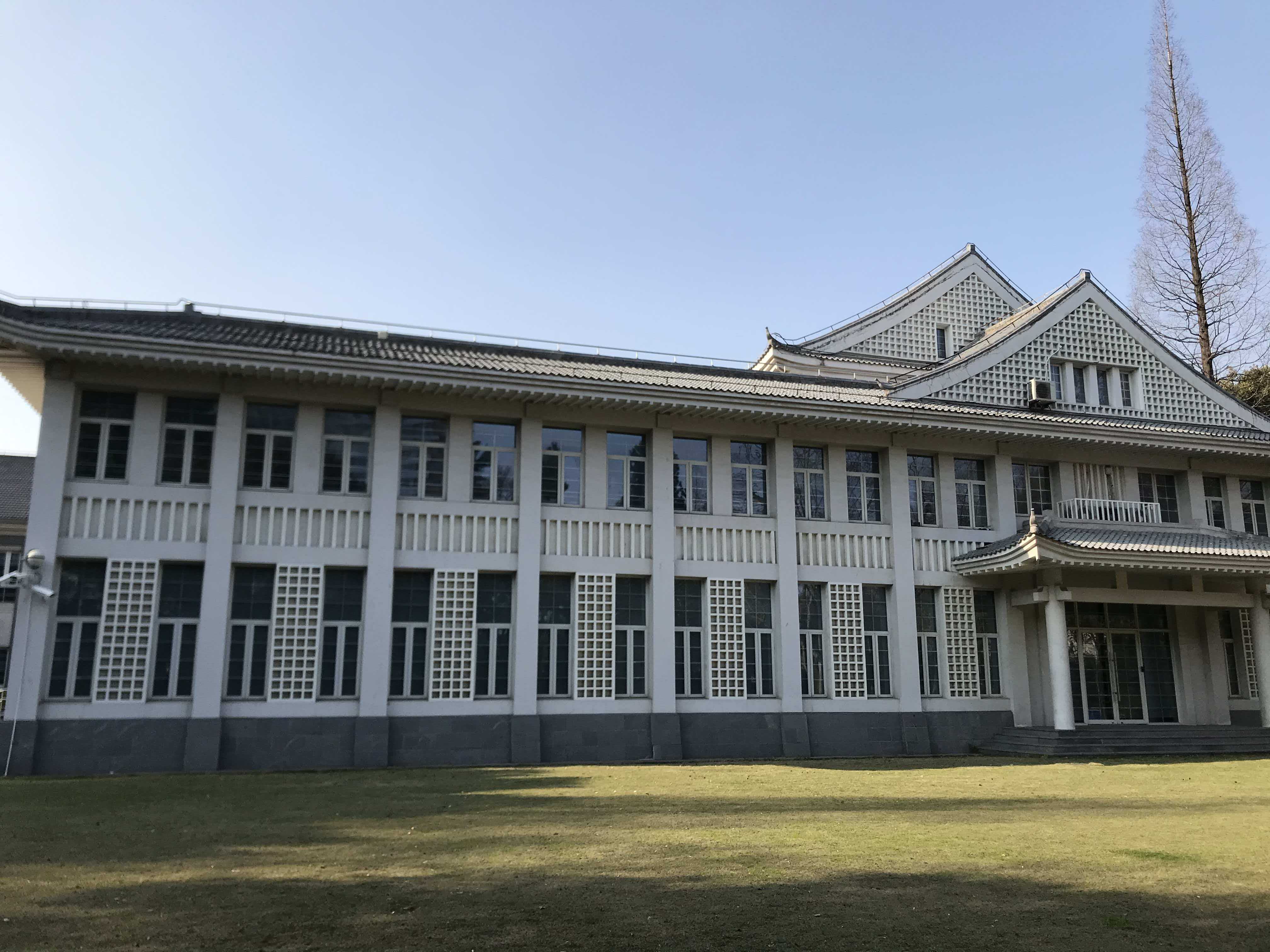
The workshop will be at the Yan Garden (燕园), Handan Campus, Fudan University, Shanghai.
Contact persons: Xiaolong Wang (xiaolong@fudan.edu.cn), Heting Li (liheting@fudan.edu.cn)
Zoom link:
May 16: https://zoom.us/j/92099801228?pwd=jjVDd37Fwv2xbkRb7RsMzze1jbXqTv.1
May 17: https://zoom.us/j/93077196821?pwd=RYqgJwQ2XR6L1afAedBau8MGcuhtMQ.1
Hotel:
M One Hotel美壹酒店
Add:No.6 Weide Road, Yangpu District,Shanghai
地址:上海市杨浦区伟德路6号
Zhengda Hotel正大宾馆(卿云宾馆)
Add:Southeast Corner of Fudan University Campus, No.220 Handan Road, Yangpu District,Shanghai
地址:上海市杨浦区邯郸路220号复旦大学校内东南角